New Year’s resolution: Gain perspective

Back on Earth we gauged the pressure, decided it was not strong enough to turn carbon into diamond rain but enough to incite change. We took on new tasks, approached old jobs with renewed determination. After all, we’d made it around the sun again: a revolution to spark a revolution. When we heard all the known matter in the universe could fit into a grain of sand, we took it in our stride; strode across sandy shores anyway, trying not to do the maths. We had been to Titan – a smog-covered moon – we knew what we were getting ourselves into. We laughed too loudly and cried out: If the distance from the sun to Pluto is a ten cent piece then the Milky Way is France!

Bel Canto – by Ann Patchett

This is an impressive book. Somehow, Ann Patchett manages to create vivid characters with plausible relationships in the most limited of settings.

The novel begins dramatically with terrorists swarming an international gathering, looking for the president of the small Latin American country. But it turns out he stayed home from the party to watch his favourite soap opera and, with no plan B, the terrorists let all but one of the women leave and keep the rest of the group hostage while they figure out what to do. The exception is the famous opera singer Roxane Cox, who proves to be a valuable bargaining tool.

The operatic theme is clever, tying Roxane’s morning singing routine into the relationships that form within the captive group. Convincingly, we lose track of time after a while and the characters quickly lose any desire to escape, accepting the house they originally entered for a birthday party as their new home.

It would be tempting with such a confined setting (both time and space are restricted here) to go into long detailed descriptions of the characters’ lives, as a way to broaden the scope and escape the four walls. But this is never indulged and we begin to care about the characters knowing little about them other than their thoughts and feelings in the immediate situation. Patchett has an amazing skill in using perspective, whereby she effortlessly shifts from one character to another at times within the same paragraph, as if gliding freely among their thoughts.

As in opera so too does this novel end tragically. However, like the captors we have become so swept up in the new life they have created, the inevitable ending comes as quite a shock.

The other thing I particularly loved about this book was the importance of the polyglot, Gen. As this is an international gathering, he becomes invaluable translating firstly the demands of the terrorists, but increasingly as a tool for characters to confess their feelings for each other; declaring love from Russian into English and Japanese to Spanish. But he’s not always required and as Roxane knows, language is not the only way to express oneself.


Tuesday Poem – Ararat

Mass movements form landslide dams
water-logged debris from days of downpour
soil slumps, slides, trees fall to rolling logs.

Mud and earth backed-up to bursting
silty avalanche betrays stacked sand-bags
a saturated story of shifting dirt.

Deluge persists after deluges cease
no need to read the residue
of forests strewn like tealeaves on lawn.

Priorities rise to higher ground
drained and piled the softened land
moulded by unearthly hands.

© Saradha Koirala 2012

more Tuesday Poems here

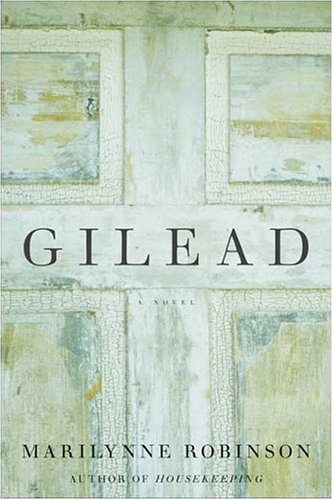
Gilead – by Marilynne Robinson

The tone and voice of this book are particularly compelling. Written as an extended letter from a dying father to his son, the meditative style draws the reader in to glimpses of everyday family interactions and the deep and complicated history of the characters’ lives.

Reverend John Ames, narrating from his home in Gilead, links the generations of Ames men through descriptions of their shared vocation and differing understandings of theology. There are certain things he wants his son to know and remember, but also stories that evolve and ramble in a convincingly reminiscent way, all the while with a hint of mystery unfolding.

I loved the father and son relationships in this book and how complicated they became. John Ames Boughton (Jack) is the son of Ames’ best friend, but named as if his own son. His arrival back in town brings out a conflict in Ames, who feels responsible for yet greatly wary of the younger man. He’s clearly hiding something and Ames senses he should be warning his own family of him before he passes on.

The young child to whom the letter is addressed appears in snippets of daily childhood life, playing with his friend Tobias while his father speculates and longs to know about the man he will grow into.

Ideas of faith in this book run deep but somehow gently, as Ames grounds his thoughts in reality and ponders very human questions of life, death and love:

…nothing had prepared me to find myself thinking day and night about a complete stranger, a woman much too young, probably a married woman – that was the first time in my life I ever felt I could be snatched out of my character, my calling, my reputation, as if they could just fall away like a dry husk. I had never felt before that everything I thought I was amounted to the clothes on my back and the books on my shelves and the calendar I kept full of obligations waiting and obligations fulfilled. As I have said, it was a foretaste of death, at least of dying. And why should that seem strange? ‘Passion’ is the word we use, after all.

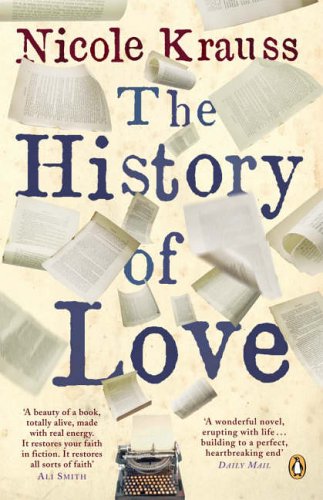
Reading ‘The History of Love’ – by Nicole Krauss

I didn’t have any destination in mind. It started to get dark but I persevered. When I saw a Starbucks I went in and bought a coffee because I felt like a coffee, not because I wanted anyone to notice me. Normally I would have made a big production Give me a Grande Vente, I mean a Tall Grande, Give me a Chai Super Vente Grande, or do I want a Short Frappe? and then for punctuation, I would’ve had a small mishap at the milk station. Not this time. I poured the milk like a normal person, a citizen of the world, and sat down in an easy chair across from a man reading the newspaper. I wrapped my hands around the coffee. The warmth felt good. The next table over there was a girl with blue hair leaning over a notebook chewing on a ballpoint pen, and at the table next to her was a little boy in a soccer uniform sitting with his mother who told him, The plural of elf is elves. A wave of happiness came over me. I felt giddy to be part of it all. To be drinking a cup of coffee like a normal person. I wanted to shout out: The plural of elf is elves! What a language! What a world!

Tuesday Poem – I dream of houses

In less than nine weeks my brother will be a dad.
He’s bigger and smarter and faster than me
rivalry sets me longing
for something of my own.

I think about it one night when I can’t sit still
and clumsy fingers make my violin strings twang.
The roof iron seems to flap loose in a gust
the neighbour’s dog… well.

I think about it when my brother phones
with news of Dad’s heart attack
and the next day when he knocks on my door
bearing brownie and sonograms.

Pictures of my ghostly nephew.
A curved spine highlighted grey
the hollows of a face.
He has a big round belly
that makes us laugh, makes us feel safe.

© Saradha Koirala 2011

more Tuesday Poems here

Tuesday Poem – House-hunting (a found poem)

Well-presented, dramatic flair
lovely outlook downtown and debonair!

Sunny and sophisticated, stunning views
flowing space, light and airy rooms.

Charming contemporary-classical feeling
fantastic sun, stunningly appealing.

Landscaped enclosed well-proportioned haven
separate dining, convenient location.

An absolute suntrap! Fully fenced!
Quintessential elegance.

www.tommys.co.nz

more Tuesday Poems here