The Lessons – Naomi Alderman

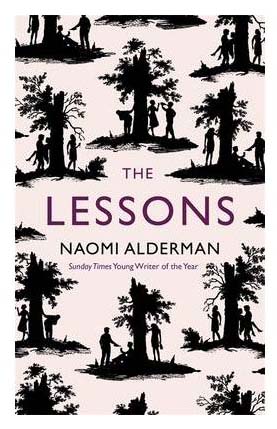
By the end of this book I was trying to understand why on earth I could relate to the narrator. I have nothing in common with Oxford student, James who falls in with a crowd beyond his own sophistication and wealth. He lives the life of excess with a ready-made circle of friends and finds – by the end of it – that he’s been in love with both his stable, sensible violinist girlfriend Jess and the over-indulging somewhat chaotic Mark.

The first person narrative reminded me of Fitzgerald’s Nick Carraway in the reflective tone and sense of awe at the people he is mingling with. The great skill in this novel is definitely the characterisation as, although I don’t know people like this, I totally believed in their existence, their reactions and disappointments.

Beyond the Oxford years, life goes on and when tragedy strikes, the characters respond in the same ways they’ve always responded: moving on, dropping out or sticking hopelessly nearby. The novel spans over 10 years of these characters lives but there’s something timeless about them. The lack of references to modern society is subtle enough that, I imagine, any generation would recognise in this their own awkward shift from university to the ‘real world’.

Every moment feels crucial and convincing as James describes relationships, secrets and his own failings to be quite the person he thought he was.

Tuesday Poem – An old wolf of a day

Bare-arm bearable when light winks through rheumy eyes,
but slow grey stealth brings plucked-goose flesh
on the howling.

In the teeth of it, the house cracks its knuckles and makes taut
its balustrade against a slobbering at the windows,
let me in licking at the sills.

Whole branches lose their grip,
recyclables paradiddle down the road.
Until my what big ears and tail brush hush.

All the better to fetal and hide
then cut open its belly and find me inside.

© Saradha Koirala from Wit of the staircase (Steele Roberts, 2009)

Tuesday Poem

Tuesday Poem – Horoscope

Things will be fine.
And then they’ll be hard for a while.
Maybe unexpected disruptions will occur,
dramas will be created by you
or those around you.

Then things will settle down again.
You will get tired
you will make mistakes:
errors of judgement or irrational decisions.
You will make the right decisions.

You will get sad. You will laugh.
You will mix your metaphors
and bumble along.
You will glance back briefly
to question the past

but mostly you’ll look up
and mostly you’ll be fine.

Tuesday Poem

The Night Book – Charlotte Grimshaw

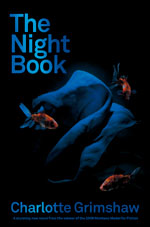
This book has received mixed reviews, some marvelling at Grimshaw’s sparce and satirical prose and others questioning the credibility of characters. The Night Book started its life as a short story (published in The Listener, January 2009) and this remains as the first part of the book. However, you can almost see where it’s been stitched together and, for me, I felt the polished, mysterious, compelling beginning belied the rest of the story.

Set in Auckland, Dr Simon Lampton is battling family problems and an uneasy relationship with his two daughters, one of whom is adopted. Meanwhile, Roza Hallwright – wife of the Hallwright – is battling her own demons and trying to stay out of the lime-light as her husband becomes Prime Minister. Simon and Roza’s connection came as no surprise to the reader but, somehow, it felt that this connection was holding the whole story together. While some characters were clearly based on real-life New Zealand policital and public figures, others seemed flimsy and, at times, embarrassingly stereotypical. Simon flees his home troubles to slum it in South Auckland with poor, solo Mereana and Roza seeks comfort in a shallow friend whose life seems to consist of manicures and getting high.

The underlying idea in this novel was an intriguing one. However, as I didn’t connect with the selfish main characters or really believe in the way they behaved, I was left questioning whether this was a comment on society or just an observation of a small part of it.

Tuesday poem – Trouble-shooting

It feels like spring today! Here’s a clensing/gardening poem:

Trouble-shooting

Aphids, wooly aphids, white butterfly,
grass grub, caterpillar, carrot rust fly.

Botrytis, pythium, rust, spider mite,
mealy bug, leaf hopper, leaf roller, blight.

Borer, verrucosis, codlin moth, snail,
lacewing (passion hopper) pear slug, scale.

Powdery mildew, citrus brown rot,
leaf curl, die-back, thrips, leaf spot.

***

Pyrethrum, garlic spray, Derris Dust, squash,
Conqueror Oil, soapy cold wash.

Jeyes Fluid, wind break, Petroleum Jelly,
Malathion, Diazinon, Carbaryl, chilli.

Methylated Spirits, insecticide,
egg shells, copper spray, Oxychloride.

Bravo, Target, Captan, Orthene,
Cut out, pick off, burn, clean.

Tuesday Poem

The Moonmen – Anna Livesey

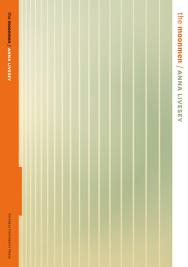
This is a delightful collection of poems. Moving through her own history now, Anna presents poetry on family life, connections and her time in Mid-west America. The final poems refer openly to her mother’s illness and all the moments that have breezed along in the earlier poems seem all the more poignant by the end of the book.

I love the way she speaks to the people in her life through these poems with many ‘characters’ appearing in dedications again and again.

Where Anna’s debut, Good Luck, felt like the clever work of an academic mind, this collection feels satisfyingly personal and reflective.

NZ Poetry Day – Tuwhare

Hotere

When you offer only three
vertical lines precisely drawn
and set into a dark pool of lacquer
it is a visual kind of starvation:

and even though my eyeballs
roll up and over to peer inside
myself, when I reach the beginning
of your eternity I say instead: hell
let’s have another feed of mussels

Like, I have to think about it, man.

When you stack horizontal lines
into vertical columns which appear
to advance, recede, shimmer and wave
like exploding packs of cards
I merely grunt and say: well, if it
is not a famine, it’s a feast

I have to roll another smoke, man

But when you score a superb orange
circle on a purple thought-base
I shake my head and say: hell, what
is this thing called aroha

Like, I’m euchred, man. I’m eclipsed?

from http://www.honetuwhare.co.nz/poems.php Steele Roberts Publishers

Tuesday Poem – Washed up in the shallows

Bright orange snail shells
a ten-limbed starfish
half a plastic gun
and the dangerous part of a crab.

A high-pitched boy kicks waves at his family
as they put cockle shells into a shopping bag.

There’s a glass bottle filled with sand
black lumps of wood like rocks
a chewed lion red can
and a rust-coloured skull.

Then it’s just sticks. Sticks and foam
all the way down to the last curve.


© Saradha Koirala 2009

Tuesday Poem

Tuesday Poem – A Pair of Sandals, James K Baxter

A pair of sandals, old black pants
And leather coat — I must go, my friends,
Into the dark, the cold, the first beginning
Where the ribs of the ancestor are the rafters
Of a meeting house — windows broken
And the floor white with bird dung — in there
The ghosts gather who will instruct me
And when the river fog rises
Te ra rite tonu te Atua —
The sun who is like the Lord
Will warm my bones, and his arrows
Will pierce to the centre of the shapeless clay of the mind.

Thinking of Jo, 1976 – July 2010

Tuesday Poem

Rachael King – Magpie Hall

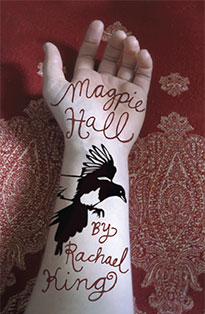
There are some really fascinating aspects to this book. I love the idea of collecting as a compulsion and form of preservation and our desire to re-write history – especially when family’s involved.

When Rosemary moves back to her Grandfather’s farm to work on her thesis, she becomes obsessed with the lives of earlier inhabitants. She imagines the fey Dora, first wife of Great-Great-Grandfather Henry, joining the secret world of tattooing as a way of collecting and connecting to Henry’s own obsessions. In her isolation, Rosemary starts to over-identify with Dora and feel the ghostly presence of a more immediate tragic past.

Rosemary’s strongest connection to her late Grandfather was through their mutual interest in Taxidermy, which is another fascinating aspect that is explored. The idea of stuffing rarities to preserve the memory of an endangered species is both tragic and ironic.

There are several self-conscious nods to gothic novels – especially Northanger Abbey and Wuthering Heights – which work in that they’re openly acknowledged through Rosemary’s work, but at times seem a little clunky. The sense of history –  imagined, hoped for and ultimately accepted – brings to light the skeletons and specimens that lurk in our own cabinets of curiosity.