How does it feel??

Paige and Lily from Lonesome When You Go react to The Dylan News:


“Lily! You heard the Bob Dylan news?” I’ve run up behind her and grabbed her by the arm. I must be looking a little panicked. She whitens.

“Oh my god, Paige don’t tell me. Not Dylan. I’m still grieving for Bowie. I can’t…” her bottom lip quivers.

“No! God no! He’s still alive and he just won the damn Nobel Prize for Literature.”

“Oh thank god!” she breathes, “My Dylan life just flashed before my eyes – the first time we listened to Blood on the Tracks all the way through, every time I’ve been feeling low and then heard a Dylan song in a shop or café or from a busker… that road trip… he’s really been there for me.”

“I know.” I give her a hug, before remembering my excitement. “He won the Nobel! Holy shit! A song-writer – a musician!”

“You’re right, this is huge! Wow. I’m going to briefly ignore the fact that it’s yet another white American male being held aloft and also the fact that most of his songs in the last thirty years have been terrible and focus on the musician as celebrated poet part.”

“Yeah, me too.”

“It’s really cool.” she grins.

It’s Friday morning and we’ve just entered the school grounds. I have Like a Rolling Stone running through my head – “how does it feel?” – and whistle the next line of organ melody aloud. Lily stops walking and thrusts an arm out at me.

“Shut up! I was just up to that part in my head too!” Her eyes widen and we stare at each other for a moment before bursting into laughter.

“I guess it’s pretty appropriate,” I say and we start singing it together, loudly and horribly, straining our voices on the lengthened vowels and ignoring the bemused looks from passing juniors. They probably only know Dylan songs from Miley Cyrus covers and references in young adult novels.

Musician as celebrated poet. I walk into class feeling like anything is possible today.
dylanesque-nod-to-the-poets
Saradha’s Dylanesque nod to the poets and poetic nod to the man himself.

Love stories in blue covers and alternating narratives

Despite the different themes and agendas, these two new YA novels from Pan Macmillan do have things in common, including both being told in alternating chapters from each character’s point of view.

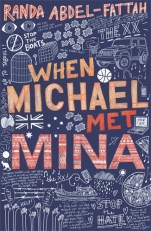
minaDeep blue.jpgWhen Michael Met Mina by Randa Abdel-Fattah  is set in Sydney amid the refugee debate, the alternating narrative between the two main characters reiterating the idea that there are two sides to every story – even if one side is clearly influenced by ill-informed, Islamophobic parents and easily swayed – and ultimately showing a more compassionate way to live.
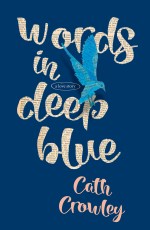
Words in Deep Blue by Cath Crowley is set in a whimsical second bookshop where people hide letters to loved ones in significant copies of texts and secretly grieve for those they’ve lost.

The first novel is politically charged, topical and raises serious concerns about social justice and the dangerous views held by those who don’t welcome refugees and migrants to Australia’s shores. The second references some of my favourite books and poems – Great Expectations, Cloud Atlas, The Love Song of J Alfred Prufrock – and shows how these shape our understanding of love, death, knowing and how they can draw us closer to each other.

Both novels show the developing relationship between two teenagers. There’s Michael, proudly standing by his family and their ‘Aussie Values’ but attracted to Mina who arrives at his school from Afghanistan, via Auburn. Mina’s initial dislike of Michael is completely understandable given his views on immigration, but she stands her ground and is determined to show him another perspective. The other novel has Henry and Rachel, best friends for years, briefly estranged and inevitably destined to be together. There’s the complication of Amy – demanding, beautiful, unobtainable – and the lost letter Rachel wrote declaring her love, but ultimately this is a charming journey of friendship and love.

Rachel and Mina are both grieving for lost siblings. It’s difficult to talk about for both of them and their losses makes them more complex than others can comprehend. Rachel helps us understand more about the dead and develops her own ideas about souls and memory in relation to what she reads. I love that David Mitchell’s transmigration of souls comes into this book in a way that changes a character’s understanding of the world.

I feel like every time I finish reading a book my understanding of life is altered just a little more and through this understanding, living becomes just a little bit easier. I think Rachel and Henry would like that idea. Words in Deep Blue gently helps readers navigate the unexpected changes and losses of life without ever feeling preachy or forced. There are more specific understandings that we gain from books too and When Michael Met Mina shows us what it’s like to have to move to a new country out of fear and embark on a dangerous and horrifying journey, hoping for safety. Michael learns about this through getting to know Mina and it’s an important lesson for all of us.

When Michael Met Mina has a strong purpose and a point of view that shifts in the way the author hopes others will also shift their perspectives. The high school dynamics are believable and real difficulties of Mina’s family are held up as a way to examine current society.

Words in Deep Blue is a more timeless story and although the cast of characters are still distinct people the messages are much more subtle. They are patient with each other, kind when they’re called on and most appealingly they all read, talk about what they read and look at the world differently depending on what they read.

Both hold important messages; both books highly recommended.

The Best of Adam Sharp – by Graeme Simsion

I spent my Saturday finishing reading The Best of Adam Sharp. On Sunday I caught the train to Yarraville to attend the book’s local launch in the chilly-but-welcoming Masonic Hall. Yarraville is adorable, I had no idea. The hall was full of intimidatingly accomplished writers whose first novels have been optioned by Sony or Universal. The launch began with a reading from Jane Rawson, a novelist whose debut is purportedly “Australia’s most underrated book” As I drank my cup of sav, held in still-gloved hands, I wondered if that is in fact the greatest literary accomplishment I’ve ever heard of.

It was wonderful listening to Graeme talk about his writing – the rush to fame The Rosie Project brought him and the philosophical way he’s had to deal with Hollywood and oddly out of touch US publishers.  The descriptions of the writing process for The Best of Adam Sharp made the novel all the more real and I even squirreled away some tips for developing an original plot.

There was an intriguing connection for me here too – Graeme sent me a signed copy of The Best of Adam Sharp after finding my book and recognising the Dylan reference of the title. I liked that link a lot. It’s the kind of thing that musical references should do and is hugely fitting when thinking about The Best of Adam Sharp – a book so imbued with the sentimentality, nostalgia, subtext and at times obsession that songs and their lyrics can be responsible for in our lives.

At one point Adam recalls his dad’s advice after he’s been caught out, “Think about what you sing in the shower” and I’m reminded of my Grandad (who passed away a year ago today) whose mood and thoughts could apparently be traced easily to the tune he was whistling. The songs in our heads are not set to random and they are liable to tell tales on us.

But of course we will cherry-pick the lyrics that have the most significance for us, Adam reminds us. We can connect with a song on even the most tenuous level if we are truly and desperately looking for a connection.

I really enjoyed The Best of Adam Sharp. The soundtrack made me feel like Lonesome When You Go had found its nostalgic and somewhat rueful parent; the scenes in France felt cinematic, making me want to be there, perhaps not for the drama but definitely for the wine; and the themes of second chances, what if, longing for something that never quite was could bring tears to your eyes.

Dylanesque symbolism for this theme crossed my mind briefly as I waited on the Yarraville platform for the train home.

The Persistence of Fiction

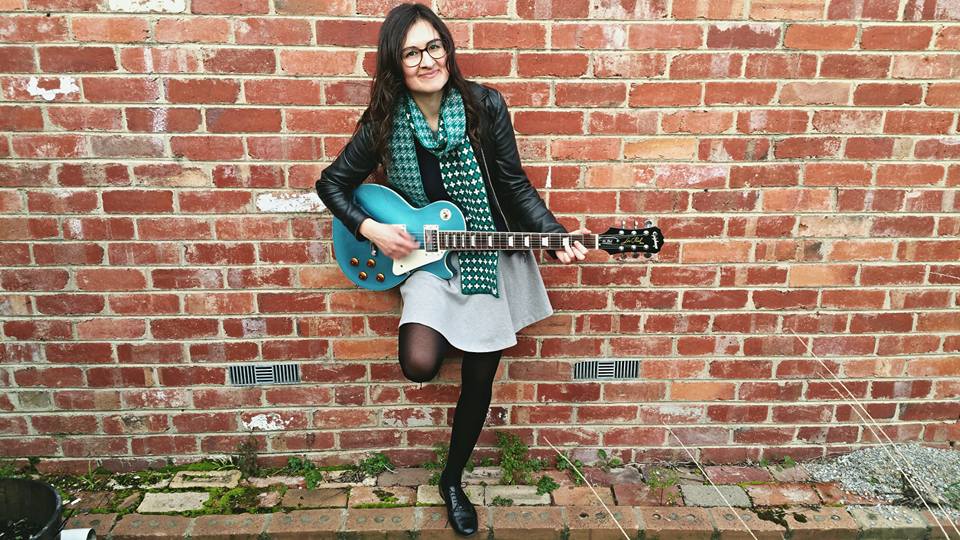
I’ve been insisting on the non-autobiographical nature of my novel for ages, but now I think I might actually be turning into my character. It’s okay though, she’s pretty cool. Yesterday I bought a second-hand Epiphone Les Paul Standard in sparkly blue and cream and although Paige in Lonesome When You Go is actually a bass player, there are substantial rumours circulating that there’s a sequel in the works in which she makes the switch to lead.

I’ve even found myself being ever-so-slightly more assertive, refusing to put up with histrionics in the staff room and flicking the hair from my eyes pointedly to signal the end of a conversation.

And of course I’ve been a long time plagiariser of Blood on the Tracks lyrics.

14095728_10153625254051946_6980138674573633326_n
Photo by Richard Wise

Perhaps this is proof that my fiction writing is just one step ahead of my real life desires, or perhaps life really is imitating art. It does happen. People look to literature – as readers and writers – for a better understanding of the world and themselves. I’ve always learnt something about myself through my own writing and, in lieu of safe, trustworthy and compassionate adults to talk to, people – especially young people – often look for emotional support by reading fiction.

I don’t think this means authors bear the burden of providing therapy or a safe and perfect world in their novels to which people can escape. Nor need they ensure their characters are ideal and consistently positive role models, but we do have a responsibility to keep in mind if we truly believe in what we do as writers. Otherwise what’s the point?

When I’m not writing or buying sweet axes, I’m a teacher. I have been for years. It’s given me a broad view of the world and an understanding that not everyone has the benefit of feeling safe all the time.

Sometimes I get to teach analysis of great literature, introduce students to writers and concepts that will hopefully stay with them as they take on the adult world. Often I get the pleasure of encouraging a young person to write something they never knew they were able to write. Other times I just read them books that help put feelings into words, their own emotional vocabularies so limited.

Always I stress the importance of language to our sense of self and well-being, and one day, maybe, I’ll even tell them about my secret life as a teenage rock star; how life is just an imitation of art imitating life.

Tuesday’s Poem

Those waterproof pants
haven’t seen much use
bought on another whirlwind trip
ferrying towards family surprises
old friends and the waves
rolled through us.

I roll myself through Royal Park
cross the tram tracks
follow the train
cycle past pale trees
reflecting back morning light, faint
eucalyptus smell of Here Now.

Warmth spreads
to gloved extremities
my angled reflection
in the Red Rooster window
turns to habit and blossom
blows gently over the schoolyard fence.

Yard Duty

I’m teaching again. Students smile at me and say hi as we pass in the corridor. Sometimes they ask how I am. When we’re practising writing they might ask me the name of that feeling like butterflies in your stomach, but not excitement. It’s anxiety I tell them. Oh, anxiousness, they say.

On Monday and Wednesday lunchtimes I’m on yard duty. I have to shoo all the students out of the corridors and I have a walky-talky that I assume works, but have never used, except to pretend to call for back-up when someone’s trying to ask too many questions of me. I hold it near my mouth and make a fake static noise. Kkkkkk. They get the idea and move on.

Today a bird was trapped inside. There was a warm breeze and the sun was out, but that bird was obsessed with the unopenable window at the top of the stairs; wouldn’t move from the windowsill. It fluttered its wings like the butterflies in our stomachs, oblivious to the door we’d opened at the end of the empty corridor.

Advice to My Younger Self

It’s going to be okay. There are many times when it won’t feel like it, but these times will pass. Have faith in your ability to do the right thing and get out of situations when they don’t feel right.

Luck has a lot to do with it all, of course, so never deny how fortunate you are because of the time and place and family you were born into. You are growing up in a paradise. Look around and be grateful.

Stick to your principles. Being a vegetarian in the 90s is hard work and you will endure a lot of salads with the bacon picked out, but in twenty years’ time you can feel proud that your existence has not harmed thousands of other living beings and your highly-developed taste for vegetables will serve you well in The Great Kale Hype of 2016.

Don’t worry about the fruit thing, they’re starting to say it’s not really that good for you anyway.

Be proud and passionate about the bands you like. Music really doesn’t get much better from about 1997 on.

Stay close to your family, they’re a good bunch. Nurture friendships – I still have no idea how these come and go.

Don’t pluck your eyebrows too thin – they will never grow back the same. Fashions change, but authenticity is timeless. Don’t be ashamed of the long genetic history that makes you look and think and be the way you are. It’s amazing, really. You’re part of that.

Read everything. Read poetry and fiction and hard stuff. Care about politics. Your brother was right to argue with you in 1991 when you were ten and said talking about Ruth Richardson’s ‘Mother of all budgets’ was boring you and it didn’t affect you anyway. It all affects you. Be one of the people who realises that. Be informed.

Your childhood is full of announcements about how special you are. You are, but so is every living thing here. Stay humble and remember the world doesn’t owe you a thing.

You don’t owe the world anything either, but try to do as much as you can. You will need time out from it every now and then and that’s okay, because – if I know you – you will always be striving to create, contribute and be part of something greater.

Have adventures, fall in love, listen, and remember to let other people love and care for you too. They’ll like that.

Road trip

Service station coffee and codral
I’ll always come for the ride
join your scathe at Australian drivers
Hammock in the dark of morning
Led Zeppelin as the sun
rises over the M1.

Mostly tradies on the road
shiny utes and toolboxes
vans with ladders strapped to rooves
small business logos branded on the side
high-vis life, Princes Freeway
Yarragon, Trafalgar, Traralgon, Moe.

Morwell, Gippsland, heart of coal
in the small town’s mall
there’s a small town shuffle
slipper-shod or uggs
and an unexpected queue
at the movie theatre.

Across the tracks a rose garden
art gallery, I’m drawn
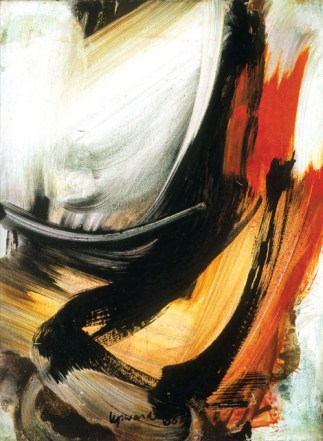
to Peter Upward’s Orange Accent II
his optimistic name rises
like abstracted flames in the corner
of a white-washed room.

Upward_1960_Orange_Accent_II.jpg
Peter Upward – Orange Accent 2

http://www.cbusartcollection.com.au/works/?id=285

PledgeMe – Lonesome When You Go

I am completely thrilled to have my first Young Adult novel published by Makaro Press!

It’s so so close to coming into existence and just needs one last push from you, dear readers!

Makaro say: ” Our press is only three years old, and for the past two years we’ve had books shortlisted in the NZ Book Awards for Children & Young Adults: The Book of Hat by Harriet Rowland (2015), The Red Suitcase by Jill Harris (2015), and just announced … Sylvie the Second by Kaeli Baker (2016), which is in the main awards with stellar writers like Bernard Beckett and Fleur Beale, and the Children’s Choice Awards.

This is exciting for a small press. It means we’re on to something. But it puts us under pressure reprinting a book to satisfy all those who want to read an award finalist.

And now we have another Young Adult book all ready to go. It is edited and designed and the printer is lined up. We believe we have another winner on our hands, and that we need a good-sized print run to bring this story to as many people as possible. But with our award commitments, we can’t do it justice.

That’s why we’re asking for your support. This is a book that music lovers of any age will enjoy. Lonesome When You Go is a book for all those students playing in a rock band, and even for those who aren’t. It’s written by a teacher who played the bass in a band at school, so she knows her stuff. And if you’re not in your first band, maybe you’ll remember when you were in one, and all that mattered was playing as often and as loud as you could (and, if you were lucky, winning something along the way). Or maybe you just like to read an exciting story – then this book is for you.

Help us get Lonesome When You Go published! And if you can’t pledge, then spread the word.”

Please check out the campaign and add your part if you can  https://www.pledgeme.co.nz/projects/4650-lonesome-when-you-go

x Saradha

The Diarised Life


No need to re-write or correct reading back
through notebooks, over notes. Overlook your
diarised descriptions of precise actions.
Pronouns, dates, exact recollections –
A detailed log of the daily grind.
There’s no poetry in a list of facts.
Look instead for the angle of the hand-
writing, denoting the slouch or the strength
of posture while writing, the scrawl or script
an indication of a mood now paled,
a reminder that these things come, and pass
like pen over paper. Be not troubled.
The end is not yet and sorrow’s age
ends again with the turning page.

From Wherever Glory Dwells, sonnet series in Tear Water Tea

The rest of my life started 22 years ago with a floral pink book that smelled of talcum powder. A diary gifted to me by grandparents. Before deciding to write in it every day, I covered it in black fabric, locked it with its tiny key and kept it stashed in the drawer beneath my bed. A typically Grandad message was inscribed in the front: “May this be the start of the rest of your life.” And it was. Just as every day is, but keeping some kind of notebook or journal has been a habit ever since.

In 1994 my daily tasks and interactions were recorded in a very prosaic form: Conversations with friends, orchestra practices, boys who may or may not have smiled at me in the corridor…tedious to re-read in the future and very self-conscious as if I knew it could be discovered and read by a family member at any moment (something that happened all the time on teen TV in the 90s). But also perhaps testament to two other things: My inability to express my inner experience of the world beyond the quotidian and my not-yet-formed understanding of how thoughts and feelings could be validated, made indelible with ink and paper.

More recent notebooks can be quite devastating to re-read. They can immediately bring back the feelings they express and if these are dark and brooding, then so too can become my day. If they’re light and fluffy – well, perhaps a reminder to myself to record the light and fluffy moments in notebooks too and not just on social media (the ultimate form of public diarising).

But notebook writing is rarely for the future self to look back on. It’s a very immediate process and a way of conversing with myself, reconciling difficult feelings and making sense of the world. The diary of my fourteen-year-old self would have served a similar purpose – laying down the facts of the day and putting them in order – and what I chose to pay attention to actually says a lot about the person I was or thought I was, or thought I should be at that time. Maybe the ‘angle of the handwriting’ on those pastel coloured pages is more telling than the words themselves.