Shift

I’ve become a carrier of borrowed backpacks
stacked with stolen paperbacks
people ask me the same thing twice
offer advice as I shift further into shady corners
push my belongings under the bed.

Or they decide not to tell me in case I react
the way they say I am sure to react
another shove and it’s out of sight
nothing dappled about this kind of light

an empty bottle, door left ajar
fear of change in a palpable pile
of coins on the dusty dresser’s edge.


I wrote this poem a week ago and realise I’ve been grappling with these feelings since. Moving to a new country has been harder than I’ve let myself admit and despite my constant optimism and persistent positive action to carve out a space for myself here, I’ve had a week of feeling a bit insignificant in this big city that beguiled me here with such promise.

However, there is much to love about my new home and I can feel glad I was lured into making the change by my high expectations, even if the reality has proved tougher.

Today I feel grateful for love, plans, a growing sense of purpose and a growing ability to trust – in myself, the future and others.

Digging – Writing, Work and Sci-fi Stereotypes.

At the start of last year I was sifting through some old posters in the English department, trying to make the classroom walls less grim, and found a laminated copy of Seamus Heaney’s ‘Digging.’ Perhaps a poem about potato farming wasn’t quite the thing to liven up the walls, but it was a nice reminder of my love for the work of the poet who had just died a year and a half earlier. I felt strongly it was a poem I needed to share with my classes.  It was my tenth year of teaching (a fact I found many opportunities to proclaim with both pride and astonishment) and, as it turned out, my last. For now at least. Teaching is hard work.

I’ve used the word “work” twice there very deliberately, of course. And I’ve been thinking about Digging again. There is such respect in Heaney’s poem for the hard labour of his father and grandfather, who “cut more turf in a day/ Than any other man on Toner’s bog.” It’s not the kind of work the poet will do, but it’s purposeful, necessary and skillful work nonetheless “Nicking and slicing neatly,” – there’s a craft to it.

The comparison between physical labour and intellectual / creative pursuits is pronounced in this poem and it’s easy to feel defensive of the latter as equally worthy, even if the results are not always as palpable.

Recent Netflixing of Sci-fi films brought up a discussion point in our house that the scientists, analysts, intellectuals and academics in movies are often portrayed as either very rigid in their thinking or a little bit unhinged. They have social anxieties and neuroses and we could attribute their obsessive interest in their particular field back to some childhood incident that needs resolving, rather than a sheer love of it. There’s little respect for curiosity and wonder.

Meanwhile, the ‘heroes’ of the films tend to be the working class – soldiers, tradespeople, the deep-core drillers who are the only ones who can save the world from an in-coming asteroid with their highly-trained and specific skills. They are physically, not intellectually, strong and they’ll need to be – combat is key to world-saving. It’s a triumphant uprising of the blue-collar as sparked by 90s Hollywood. These characters have hardships too, but they toil, construct and contribute. Science is both mocked and idealised as the final victory lies with the most ordinary, humble and unassuming character who’s just doing his job the best he can. Albeit with highly sophisticated, carefully researched, meticulously designed technologies.

Of course Sci-fi films are known for their extremes and Hollywood notorious for unrealistic and unfair portrayals of all kinds of members of society. It almost seems pointless to even bring it up, except that it feels like a constant and powerful theme.

Perhaps this is partly why I often find myself trying to justify the importance and effort involved in the work of the writer and end up reading all sorts of reassuring articles about writing, such as these ‘non-rules’ for writing by Elizabeth Percer. The third of her rules seems to fit nicely with what I’ve been thinking (daydreaming, wondering, lying around contemplating): The idea that writing work looks different to other kinds of work. Percer says,

About 80 percent of the writing I do looks nothing like writing. It looks like reading, or daydreaming, or driving, or drawing, or listening to music, or lying on the floor, staring up at the ceiling.

Many other authors have discussed their ideas about writing as work (e.g. Ford, Eugenides) and often approach it as a desk job or nine-to-five. But to Heaney’s father it must not have looked like he was very busy at all, with much of what he did being possible from the same seat all day and hardly sweat-raising stuff.

As my students read Heaney’s poetry last year they discussed ideas about the importance of writing especially during difficult times, as Heaney was doing; writing as a craft or calling as worthy as potato digging when potato digging needs to be done; and that constant voice in our heads trying to tell us that what we want and do is just as valid as what anyone else is wanting or doing with their time on this earth. It was a fine moment for an English teacher to ‘retire’ on.

Heaney ends his poem with the decisive lines, “Between my finger and my thumb/ The squat pen rests. /I’ll dig with it.” It moves me every time.

When so much in the world is Hollywood constructed, media-manipulated, target marketing and just plain inauthentic, to find moments where people are doing what they do because they genuinely love and believe in the value of it – well, it keeps me digging, “down and down / For the good turf.”

In The End


In the end we were grateful
we’d installed the pull-up bar in the hall
and cycled to the gym on days off.

We snibbed the back door, but it opened outwards
so there was no way to block it from inside.
They were slow but determined

as they pushed through
the gate from the alleyway
usually held shut by half a breeze block

probably sniffed us out
from the old mattress we had left in the shed
stained before it was ours

but smelling mostly of our recent insomnias
our months of tossing and turning
across its crumpled springs.

You’d bought a vintage G&M cricket bat
for nostalgic reasons really
but kept it by the bed just in case.

When the lock on the door wouldn’t hold any longer
you took the bat to the heads of the uninvited
grabbed my hand and ran.

‘Sylvie the Second’ Blog Tour – Interview with Kaeli Baker

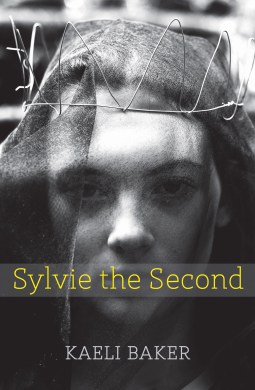
sylvie cover copy.jpgSYLVIE THE SECOND is a daring new YA novel from Wellington publishers Makaro Press (Submarine imprint). Like Sylvie, it’s finding its way to being more visible and has even been spotted on the shelves at Whitcoulls next to teen favourites Johns Green and Boyne!

The book deals with some difficult but important issues that also need to be made much more visible in our society. I hope it will start some good discussions with young people and their families about what they experience and how they cope with the pressures and expectations of growing up.


I talked to author Kaeli Baker about teenagers, writing in airports and her own hopes for Sylvie:

SK: This novel tackles tough but very real teenage issues. What kind of reader did you have in mind for this book?

KB: I guess I was aiming for teens, particularly girls, who are struggling a little with finding their way, their voice, their values… So, basically teenage girls in general! Being a teenager is hard enough and then when you add extra stress to the mix (and everybody has extra stress in one way or another), it can become even more difficult.

SK: But there are some positive moments in this book too and the ending was particularly heartening. What do you hope readers will take away from it?

KB: Most of all I hope that readers will put the book down after the last chapter with a renewed sense of hope and faith in friendships, a clearer sense of how they are willing to be treated by their peers and where their limits are, and a little more confidence in seeking support if they need it.

SK: There must have been some difficulties in writing this – trying to give a sense of hope and ‘normalcy’ to Sylvie’s life, but not underplaying the very damaging and traumatic events she is experiencing. How did you handle this balance?

KB: I think Belle and Adam were significant for keeping the balance of normalcy and hope in Sylvie’s life. I felt like it was important to confront Sylvie’s hardships and trauma, but also give a nod to her resilience. Even when things are going wrong she gets up every day and has a goal in mind – to get through it. It’s just that some of the ways she learns to cope aren’t healthy. I think that if she didn’t have such a loyal friend in Belle, especially, things could’ve been much worse.

The brief interactions with strangers was another way in which I tried to weave some hopefulness into the equation. The woman on the bus, the little girl and the guy on Christmas day… Even Alannah, the doctor. Often we influence other people without even realising it. Our interactions can be so valuable and we give away pieces of wisdom all the time without realising that anyone’s heard it. I wanted to convey that, and also provide some faith in humanity – there are a lot of nasty people in Sylvie’s life, for whatever reasons, and I felt like it was important to remind the reader that most people are good, and not out to hurt them. As a teenager, as a woman, and in fact just as a human being, it can be hard to trust that sometimes.

SK: What other difficulties did you come across?

KB: The self-harm was something I thought a lot about. I didn’t want to glamourise it, or offer it as an effective strategy for Sylvie to cope with her distress, but I did want to address it head on since it’s a real method that some people use. I guess I wanted to write about it fearlessly but sensitively at the same time. Sylvie’s regret is clear throughout – she knows it’s not a solution for her. In saying that, I was cautious not to come off as preachy. I found it one of the most difficult things to balance.

SK: Belle is a lovely character and, as you say, a strong support for Sylvie. Is there a “Belle” out there for all of us when times are tough?

KB: I definitely think there is, in some form or other. She might be found in the shape of a friend, a family member, a counsellor, a voice at the end of a helpline or someone’s personal faith. It’s really important to remember that even when we feel like we have no one, there are still people who will help us, and things to hold on to.

SK: One thing that worried me about Sylvie was how easily she was able to get close to someone after what happened at Chris’ party. I wondered if this was her dealing with or failing to deal with things?

KB: Such a good question! It’s absolutely a sensitive situation, and everyone who has been through an experience similar to Sylvie’s will process it in different ways. So I think the answer to this question is really up to the reader’s interpretation.

Adam is an important person in Sylvie’s story in that he represents the good guy. It’s so easy to believe after you’ve been hurt that everyone is bad, and I wanted to put forward the idea that that’s not the case. Whether Sylvie letting him get close to her is a mark of dealing or not dealing is up for debate.

SK: What do you think the main differences are for this generation of teenagers compared to previous generations? Do these worry you or give you hope?

KB: I think one of the biggest differences is social media, which is a bit of a double-edged sword. On the one hand it’s great at keeping people connected and it’s such a good platform for change. On the other hand it can be difficult not to compare yourself to other people’s seemingly perfect lives, and there are more social pressures, covert but constant bullying, sexting … I think it can lull people into thinking they’re in control, but social media platforms like Facebook and Snapchat keep all of your photos – and so can the person you sent them to. It really worries me.

Having said that, I celebrate the fact that society is now better at having difficult conversations around mental health, domestic violence, sexual assault, and other topics that are real and relevant but have historically been brushed under the carpet. There are so many amazing organisations working to help people experiencing these problems and encouraging society to keep the conversations going. Young people’s voices are being heard more now. That gives me a lot of hope.

SK: Your current work with teenagers has no doubt informed the themes of this novel, but have you always been a writer too?

KB: I didn’t set out to be a writer, but it’s always been something I enjoyed and did a lot of. I wasn’t great at a lot of subjects at school, but right from my primary school days I have memories of teachers raving about the stories I wrote. I also have journals full of poems that I’ve written throughout the years. 85% of them are absolutely terrible! It’s quite funny and also extremely cringe-worthy reading them now.

SK: And how did this novel come into being?

KB: The idea came to me one day and I immediately sat down and began writing furiously. It was like Sylvie had been waiting to tell her story for ages. It took me about a year to write the whole thing, usually after work in the middle of the night with many cups of tea.

Once I learned it had been accepted for publication the editing process was pretty full on. There were huge chunks taken out that were slowing the whole thing down and more dialogue added. It took a long time.

A lot of it was actually edited while I was overseas. I remember sitting in an airport in Birmingham editing it as a bunch of extremely heavily armed police traipsed past. That was an unnerving moment… I also did a lot of the editing in Wales, in this little stone cottage near Hay on Wye. It was quite a well travelled manuscript!

SK: Are you working on other writing projects you can tell us about at the moment?

KB: I’ve just finished up a collection of short stories and have started writing something new – a bit of historical fiction. I also have another story that I’m always adding to when the inspiration hits. I’m really never not writing. Except when I’m sleeping. And eating.

SK: What are your hopes for Sylvie – the book and the character – now?

KB: I hope that the book reaches someone who needs it. That’s all I can really ask for.

For Sylvie herself, I hope that she continues navigating bridges and finding her way. And I hope that she and Belle are old ladies sitting together on the front porch one day. With lots of cats.

Sylvie is on a blog tour! Check out these other blogs and dates for more reviews and interviews:

Mon 14 March: beattiesbookblog.blogspot.com
Tues 15 March: kidsbooksnz.blogspot.co.nz

Thur 17 March: booksellersnz.wordpress.com
Fri 18 March: bestfriendsarebooks.com
Sat 19 March: msblairrecommends.blogspot.co.nz

And leave a comment for your chance to receive a bookmark and copy of Sylvie the Second.
The Great Weight of Metaphorical Lightness

Never get so attached to a poem you forget truth that lacks lyricism – Joanna Newsom, “En Gallop.”

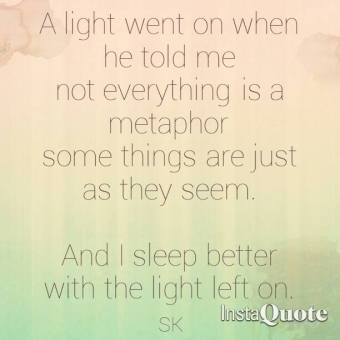
12744005_1050761621613372_681022737855470830_nJust as I was trying to learn that not everything in life is a metaphor, we got a new bed.

Beds are so deeply symbolic and a new bed bought together is steeped in meaning. On a more practical level, it really has changed our lives. Perhaps that sounds hyperbolic, but lives are just made up of days and nights. It really has changed our days and nights.

Sometimes I think I’m living in The Great Poem of Life where everything stands for so much more and demands to be read twice, scrutinised, figured out figuratively. Sometimes I think that sounds like an excellent place to live.

The old mattress has been dragged to the shed out back and very quickly looked like something one should not be touching, let alone relying on for the restorative properties of a good night’s sleep.

It reminded me of how the light leaves a person’s eyes when you suddenly realise you don’t love them any more. But that’s not something that’s happened to me for a while, and far too much weight to give to an old mattress that already sags with such woe and the burden of having been such a burden.

Building Consent

The romantic notion of buying a rundown clapboard villa
pouring heart and soul into doing it up by hand
spending all of one’s time loving it
back to life – gutting out the back half sourcing
sustainable surfaces for breakfast bars and just the right shade –
is quickly debunked as I walk past a weathered
rusted bungalow, boards rotted through
shirtless men shouting across the trampled front garden
propped with piles of Bunnings purchases
and a ‘dunnys R us’ in pride of place
sounds of dropped steel and hammered edges
everything shifting slightly in the relentless
heat of yet another day on this damned project
too many chiefs, too many cooks and not one chef in the kitchen
that currently looks like a workshop
sawdust lining surfaces and can’t even make a cuppa
with all this mess
all these people coming and going
traipsing through our idealised disaster.

This, Time

“I was working on the proof of one of my poems all the morning, and took out a comma. In the afternoon I put it back again.” ― Oscar Wilde

In the spirit of just getting on with it, I’ve started writing a poem a day. It doesn’t have to be great, I don’t need to spend all day on it, I may not even share it with anyone – and somehow those facts have liberated me. Okay, so this is only day two of the project, but I have a good feeling about it.

I always learn something about myself when I write a poem. Yesterday’s poem had these lines in it:

A future exists again and again I say:
This time is a gift.

My ability to think about the future comes and goes and it’s hugely reassuring when I can see those first rays of light above the horizon again, as I can now.

But the slippery nature of the future means it’s always renewing itself and therefore can exist “again and again.” Also, I need to remind myself that having time to write is a gift, so writing a poem a day is really the least I should be doing with that time, something I remind myself of over and over: “and again I say…”

Seeing the future can also help alleviate my anxiety and hold me in the present – enjoying now with a feeling that the future is going to be okay. “This time” is the present; right here and now is a gift.

Having explained my intention with those lines, I do acknowledge that “This time is a gift” is completely cheesy and the kind of memefied nonsense I’ve railed against in the past. So today I changed it to:

A future exists again and again I say:
This time, it’s a gift.

I hope the same levels of meaning remain: A view of the future exists again and again; the two separate thoughts, one of a future existing again after it had disappeared and one of me again telling myself to enjoy the present; and also the acknowledgement of the gift of free time – but I’m learning something else too. The comma changes “this time” so that the future I now see is a gift, something good, implying I’ve seen it before and it looked unappealing or possibly frightening (a classic role for Future to play).

These altered lines reassure me because the slippery nature of a future (note indefinite article still) is grounded slightly with “this time” – perhaps it won’t elude me this time. There’s something different (probably better) about the nature of the future I see…this time.

There’s a feeling of trust too if a future is being gifted to me and I can relax a little from worrying and straining to see or create it myself.

“This time, it’s a gift” also seems to lend more weight to the nature of time when there’s a pause just after the word and it’s reiterated through the pronoun. It expands beyond the present, which we know we must value and into that future – whatever it is this time – time itself is a gift.

But I’m still left trying to reassure myself “again I say: This time…” as if, naively, I’ve believed in this idea every time with as much conviction as I do now.


see snippets of my daily poems on instagram


0 jobs found

Screenshot (4)


I’ve embarked on a slow and lazy job hunt from the strangely privileged position of not really needing a job. I add obscure filters to my searches on Seek and write slightly-too-quirky cover letters. I’ve been taking my CV to bookshops, browsing the shelves, chatting about books, sometimes even remembering to ask for work. I’m tired of work for now.

But some days a passing sense of nostalgia drifts through me and I miss structure and connection; the way work gives one’s day, week, existence a sense of drive and purpose. Sometimes I miss extrinsic motivation, routine or feeling I’ve really earned my time off and sleep-ins through an exhaustive week of contributing to the world.

It’s likely I’ll be teaching again soon – you can take the teacher out of the institution, but you can’t… etc. And it truly is a good job: Worthy and hard. But for now I’m on hiatus. A sabbatical from usefulness. A pause from obligation. I find satisfaction in slowness and try to see like a poet again.

Bowie

David Bowie has died and there’s been a heartbreak fluttering in the wings for months.

David Bowie has died and I’m back to Valentine’s Day 2004
leaping in Wellington rain with one of my oldest friends singing along
Ziggy himself on stage mere metres away.

David Bowie has died and you have cancellations all morning so we go out for breakfast. The café is quiet, the chef your best friend.

David Bowie has died and I buy potting mix to repot the succulent I decorated for Christmas. I take my time to cycle it home, stop to sit in the shade of a eucalypt and write.

David Bowie has died and we’ve bought an outdoor table on ebay
drive to collect it from a neighbourhood of overgrown lawns and car collections
trash thrown in heaps on the footpaths.

Username ‘kewlshit’ is burly and mean. By god I bet he’s done some things he shouldn’t have over the years. But he’s restored the table to hipster-appealing charm, calls a younger man his “servant” as he carries it out shrouded bizarrely in leopard skin print.
It’s been 37 degrees and raining this evening.

David Bowie has died and we listen to all our favourite songs of his, remembering all the other times we listened to those songs, where we were and how they became so. I wish I knew you years ago.

David Bowie has died and we drink gin and tonics, watch the last half of The Godfather which we’d been saving from the night before.

David Bowie has died and I can’t stop admiring our new table, our first joint purchase, white and mint stripes on a wrought iron base. I wonder how something I love could have been created by a man I have nothing in common with.

And then I wonder if he too listened to Bowie tonight and which song struck him in the hardened heart as he sang along, what line reminded him of younger days or that party where he met that girl he fell for, the girl he perhaps bought the leopard skin for.

I wonder which album cover sticks in his mind, captures his imagination the most, which is his favourite lyric, his favourite Bowie quote and how he heard the news tonight, how it stopped him
before he had to get on with it all.

Spatial Awareness

One of the last things I did before I moved countries was hire a small truck and a storage space to house my many accumulated things. I was anxious-but-organised. A guy exposed his prejudices. Here’s the story:

I arrived at the storage place with my brother and our (male) friend. I had booked the space and truck well in advance and all was ready for me. I was pretty excited about driving a truck, to be honest, and the place I was moving out of had typically difficult access and narrow streets. It was going to be a blast.

I asked to see the space I’d hired, just to check it was going to be big enough for what turned out to be an enormous amount of stuff when I started packing it into boxes. I invited my companions to come and have a look too, as they had also recently laid eyes on my giant pile of things. The man at the desk made a flippant comment about how that would be a good idea, because men have better spatial awareness than women and attempted a very forgettable joke along the same lines.

When it came to taking the truck away he asked who was going to be driving it. At this point my brother and friend had had almost nothing to do with the whole process – except for groaning at the sexist joke attempt – I said I would be driving. Of course. This was my idea, my hoarded possessions, my move. For some reason he seemed surprised and said “good for you.”

Driving a small truck around the windy streets was as awesome as I had anticipated and after spending hours filling it with as much as we possibly could, I collected another companion, did a three-point turn on the hill outside my house, made tooting gestures as we wound past other heavy-vehicle drivers with whom I had a new found bonhomie and displayed some nifty defensive action when someone pulled out in front of me (how they didn’t see ME in a TRUCK is incomprehensible).

When I arrived back at the storage facility the man we had been dealing with stopped me and offered through the passenger window to back the truck into the garage for me. I wanted to tell him about the three-point turn, about where we’d come from and how I got myself, all the things I own and two passengers safely to that point, about how much fun we’d been having – but there was a small part of me that felt I should submit and let him finish off the process. For a moment I thought that because he had offered, it must mean I was incapable.

Thankfully, my friends insisted I had this and wound the window back up in front of his astonished face. I proceeded to back the truck neatly into the space provided, despite my apparent gender-related spatial disabilities. When I got out I was told how I could have done that better / differently / his way. I could not have been more disinterested in his opinion and had a photo shoot behind the wheel before unloading.