Lineage – a prezi poem


The last few apples
hang colourless, still
surrounded by curled leaves.
That smell.
Wooden floors
throw back complaints
outdoors merges in.
Years have passed.
Still. A silent ceremony
brown spots on thin skin
a windfall, crestfall.
Fruitless again.
© Saradha Koirala 2011
“Gulls wheel through spokes of sunlight over gracious roofs and dowdy thatch, snatching entrails at the marketplace and escaping over cloistered gardens, spike topped walls and treble-bolted doors. Gulls alight on whitewashed gables, creaking pagodas and dung-ripe stables; circle over towers and cavernous bells and over hidden squares where urns of urine sit by covered wells, watched by mule-drivers, mules and wolf-snouted dogs, ignored by hunch-backed makers of clogs; gather speed up the stoned-in Nakashima River and fly beneath the arches of its bridges, glimpsed from kitchen doors, watched by farmers walking high, stony ridges. … over the roof of a painter withdrawn first from the world, then his family, and down into a masterpiece that has, in the end, withdrawn from its creator; and around again, where their flight began, over the balcony of the Room of the Last Chrysanthemum, where a puddle from last night’s rain is evaporating; a puddle in which Magistrate Shiroyama observes the blurred reflections of gulls wheeling through spokes of sunlight. This world, he thinks, contains just one masterpiece, and that is itself.“
David Mitchell starts his hour with us by reading this passage from chapter XXXIX of The Thousand Autumns of Jacob de Zoet. Having not yet made it to this part of the book myself, I instantly grow determined to persevere with what I’m finding to be a demanding yet rewarding read.
I’ve flown up from Wellington with a clammy handful of questions to ask about writing, narrative and genre but also with acceptance that being in the same room as a literary master will be inspiring enough.
There’s little time to linger on the last line of his first reading, but enough to make the connection that Mitchell is far too humble to ever suggest he his creating masterpieces. He lets us applaud and release our held breath before confessing he’s completely sick of his latest book and wants to read us something entirely new.
A short story, An Inside Job, which he says is also an excerpt from the novel he’s writing at the moment. It appears to be a return to family oriented stories with a split marriage, jealous father and somewhat precocious-sounding young son. It also seems to be set in Worcestershire – perhaps a return to Black Swan Green?
Emily Perkins asks the thoughtful questions of a well-read Mitchell fan and the audience quickly tune into the humour and humility of our guest. He talks a lot about The Thousand Autumns, which – as a historical novel – sounds like a huge amount of work went into researching and crafting a sense of authenticity. As the novel explores different cultures and language, Mitchell says the great difficulty came in creating a plausible voice for all his characters that wasn’t “too authentic.” Twenty-first Century readers need to believe in the language of the characters but if it’s too real it starts to “sound like Blackadder.” Instead, Mitchell had to create what he called a kind of “bygonese” – language that we accept to be of a certain era.
Again and again David Mitchell shows us that he loves to talk about writing but in no way does he at all assume we’ve read his work. A fair assumption it would have been too, given the size and calibre of the crowd.
When asked about his writing process, Mitchell describes his ideas for novels as always there circling “like aircraft in holding patterns, waiting for their turn to land.” So no writer’s block then? He says he became anxious to finish The Thousand Autumns so he could get on with the next two novels, which he has a clear sense of already.
Perhaps the opposite of writer’s block then? A flood-gate of sorts. He admits that he is “wildly over-ambitious” with all his writing ideas, creating “literary cathedrals” that collapse under their own weight. The novels themselves come out of the “rubble” or the bits and pieces that survive the crash, “palimpsests” echoes and memories of the grand ideas they began as. Surely a self-deprecating remark but it does seem likely when looking at the structure of all his work: pieces stacked and rebuilt, connected by tough thread. He quotes Alan Bennett’s “Style is the sum of one’s imperfections,” suggesting that any mistakes he makes, he makes his own.
Hearing writers talk about the writing process is enlightening. As a reader and teacher of David Mitchell’s books (my Year 13 class are studying Black Swan Green as we speak), unpacking the creative mind is not necessary to the enjoyment of the novels but it certainly adds to it. Mitchell says, of the five elements of a novel – plot, character, structure, style, theme – he always starts with the plot and character; ideas evolve as he writes. He says it’s important to get plot and character right, but novels need to have ideas too. For example, the idea of ‘miscommunication’ became interesting as he researched and wrote The Thousand Autumns, but it was not where he started. He says all novels end up having a few “default themes” such as ‘memory’ or ‘freewill’, even if that’s not what they’re trying to be about. ‘Story’ is always about remembering and trying to pin down a kind of truth and when creating characters it’s inevitable to start thinking about who’s really in control.
But the idea of ‘miscommunication’ is pertinent and seems to run through many of his novels: Jason in Black Swan Green stammers and can only really express himself secretly in his poetry; Ghostwritten has a transmigrating soul trying to be heard, as well as characters who hide, are blind or are merely voice. In Cloud Atlas, miscommunications are deadly. Perhaps this comes from Mitchell’s own speech impediment and the effort he has had to go to to communicate. As a stammerer, he has said he must think further ahead in the conversation than most people to see what words he will need to replace, resulting in him having a deeper understanding of language and speech than other writers. His most self-assured moment comes when he admits he is very good at writing dialogue and creating convincing character voices.
Mitchell’s reasons for writing seem to be standard, and maybe we shouldn’t ask people who do something so brilliantly why they do it. It certainly sounds as though he has to write – with so many ideas circling above his airport-brain, but, like many writers, he is fascinated by the power of story and how dependent we are on narrative to help us make sense of the world. However, when asked about his own story, he says he’s never been that interested in it but more the “common denominators between all our stories” which therefore becomes “the human story.” This might explain why his first three novels do not hint at his own life at all and he says he didn’t want to write about himself until he started his own family and became more interested in domestic life. Black Swan Green was written as Mitchell became fascinated by the constant “changing gear shifts of marriage” and started to think about his own beginnings.
When asked about his influences, Mitchell says he also writes because he “aches” to make people feel the way he has felt reading some of his favourite writers. However, he dismisses these as influences and spoke more of an aspiration to be as good as the writers he loved as a kid.
The hour is up before I get to ask my own question, but I feel he’s answered so much more. It’s not just being in the presence of a great mind that’s awe-inspiring, it’s being part of the conversation, adding to our collective human story.
With my bad eyesight
and your bad accent
a discarded bag of takeaways
is a crumpled fallen beast
and all your stuff
has become your staff.
© Saradha Koirala 2011
The night’s air is audibly cold
Dust and light whorls, unseen
Imagined icicles pierce through
A blizzardous, bilious cry.
Dust and light whorls, unseen
Highlights of imperfection
A blizzardous, bilious cry
Then a rush of echoing space.
Highlighted imperfections
The dullness lies muffled and strained
No rush of echoing space
Just muted, frozen and raw.
The dullness lies muffled and strained
A thick rug, a peeled wall
Just muted, frozen and raw
Unearthing all the wrong words.
A thick rug, a peeled wall
Remember, there’s always been life
Unearthing all the wrong words
Understanding every shuffle and start.
Remember, there’s always been life
The night’s air, audibly cold
Understand every shuffle and start
Imagine icicles piercing through.
Based on a task set for The 820s – read some much better versions of this exercise here!
Drawn from your bed mid-dream
you are vaporous like the bulbous clouds
the hill-like bulges that are cloud-like hills.
You are the man in the background
of Chagall’s Green Violinist
contorted but happy and with no thoughts today.
There is colour in the breeze
a tune in every brush stroke
every movement filled with expectation.
Your levity defies gravity and gravity
cannot force you still. So you rise still higher.
Your naïve wings of puppet strings.
Stay out of reach.
Be weird, be light.
Happy Birthday, Tuesday Poem!
Watch as the communal birthday poem evolves!
…the lyric poet’s images are nothing but the poet himself, and only different objectifications of himself, which is why, as the moving centre of that world, he is able to say “I”: this self is not that of the waking, empirically real man, however, but rather the sole, truly existing and eternal self that dwells at the base of being, through whose depictions the lyric genius sees right through to the very basis of being
– Nietzsche
Poetry is not a turning loose of emotion, but an escape from emotion; it is not the expression of personality, but an escape from personality. But, of course, only those who have personality and emotions know what it means to want to escape these things
– T.S Eliot
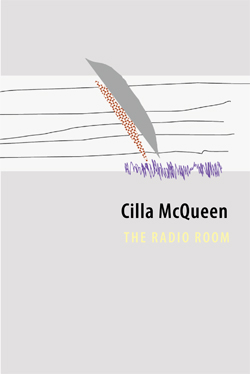 After hearing Cilla McQueen read ‘Ripples’ at The City Gallery recently, I have been engrossed in The Radio Room.
McQueen is a talented and intelligent poet whose work spans everything from the tiniest insect “At eye-level with the ground I see its round black nose, / soft pea-green skin and sparkling eyes.” to the nature of existence “…over time the mind / caught on a detail , thorn, spark, madeleine, opening/ a bubble/ torus/ wormhole;/ via chance harmonics,/ pools of connection, shocks and ripples,/ traversing dimensions.”
Her use of form is both meticulous and playful and there are several pantoums in this collection, highlighting this scope. My favourite is ‘Mining Lament’ where the repetition really does echo lamentations. The lines “Remains of the hill the painter saw” and the images of “rutted clay”; “stubborn relic” and repeated harsh verbs (“sluice”!) contrast so perfectly with the “rounded hill of golden ore” that, although the poem is ekphrasis of an 1870s Aubrey painting, it is so alive with destruction and resulting desolation.
McQueen proves she is a craftswoman and an artist in this collection. Her ability to move smoothly from one form to another without ever sounding forced or lost provides the reader with security and trust as we travel space and time – from the Fouveaux Strait to Ynys Elen. The many references to other artists and poets – Hone Tuwhare appears in moments of reflection and humour – confirm McQueen’s status as both brilliant and very human.
I’m drawn again to my mother’s jewellery.
Not those she’s owned – oversized earrings of the eighties,
hand-crafted bracelets from Asian markets
or the chunky silverwork she made in the seventies –
but the ring she had modified for my twenty-first:
a silver cage added to her wedding band
holding a blood-red garnet from Kashmir
during travels before my time.
I’ve been wearing the earrings
gifted at another significant date
one lost, confessed, replaced
they whistle gently, spinning as I walk.
There were garnets again at graduation
two small studs and a matching one
threaded on a thin silver chain,
delicately linking the past to my newly laid path.
The recycled glass pendant we bought together
a memento of a strenuous tramping trip.
Mine concentric rings of wine bottle necks
while hers is more elegantly crafted.
I thought the carelessly dropped list last Christmas:
Saradha, necklace would have spoilt the surprise
but I didn’t know how the string of cut glass would
send prisms of blue and amber around every room I’m in.
And now this cupid cameo in old fashioned green.
She’d watched my reaction carefully to help her choose
when we shopped together, our gentle patter like precious stones
or the sound a timpani might make if you only knew it by name.
© Saradha Koirala 2011
 Saradha Koirala