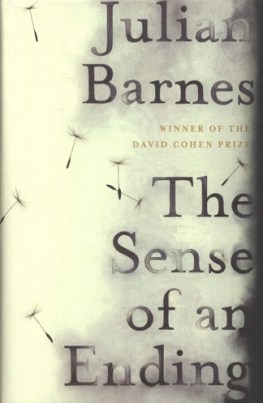
The Sense of an Ending – Julian Barnes

BARNES

A book about aging, regret and the mutability of the past. Middle-aged Tony Webster lives an unremarkable life, quietly getting on with it and content with his lot. But as he looks back on his teenage and university years, things start to replay and shift in his memory.

An unexpected bequest from the mother of an ex-girlfriend sets things unravelling – Tony just “doesn’t get it.” Until on the last page he does.

Barnes is an amazing craftsman, keeping the story smoldering gently to the end. His meditations on aging and remorse – etymologically, Tony points out to “bite again” – ring true, and the fact that the past will eventually bite back becomes “philosophically self-evident.”

This book is proof too that a well-edited and concise piece of writing (the book is only 150 pages) can evoke an as convincing – or even more so – world as a 600 page tome. The descriptions of the adolescent friendships – their rituals, phrasings and preoccupations – in the first half of the novel are utterly plausible and I suspect drawn heavily on Barnes’ own philosophising, self-assured youth.

Perhaps the older man looking back on the mistakes of his youth is an obvious narrative form and indeed I’ve read a few of these recently, but this is far from formulaic or even at all predictable. The story itself is so subtle, it’s the telling of it that is so absorbing.

More here: www.julianbarnes.com
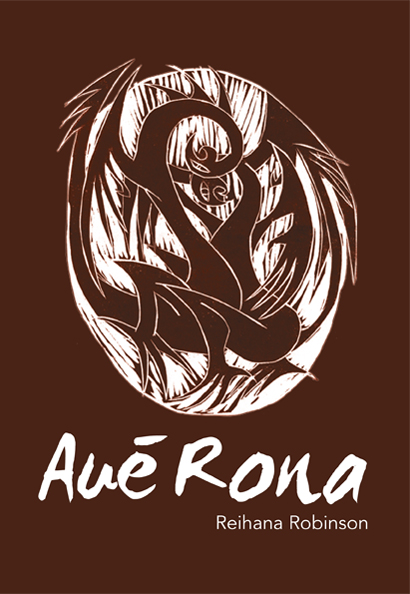
Auē Rona by Reihana Robinson

On Tuesday night I was lucky enough to attend the launch of Auē Rona, by Reihana Robinson. This is a beautifully produced book from Steele Roberts, with stunning images by Noa Noa von Bassewitz.

Launched by the ever-entertaining Roger Steele, this was a true celebration of an amazing new collection. I particularly enjoyed Reihana’s readings (after she revoked her threat to call on random audience members to read on her behalf), in which she embodies the exiled Rona, imagining her anguish at being cast out of the earthly world.

The first poem in the book, “How it all began” retells the legend of Rona, who when out angrily collecting water for her children, curses the moon for the darkness and is pulled up into the sky. Robinson’s retelling in Rona’s voice “Such pitiful pleas – / her thirsty brats” adds a lovely colloquialism “stuff you moon / boil your pea brain with pūhā. / Put your flat head into the cooking pot.” and a killer ending with the moon’s own take on the relationship.

Similarly, there are modern references adding both light and weighty touches to Rona’s story. “Rona does the hula” is full of rich imagery as Rona looks back at her children who have now “grown to pimply adolescence.” A kind of love poem to the moon, Rona recalls the night “…your love slunk a trail, / weaving limbs and heart as if / bat wings were my blanket, / my shawl.”

This is a wonderful collection that brings Rona’s legend alive, re-imagining her love, anger and regret as she grows old away from her family and earth – “that beaten planet.”

Reihana Robinson’s writing has been published in a number of journals including Landfall, Cutthroat, Hawai’i Review, Trout, Melusine, JAAM,  Takahe, Cezanne’s Carrot and Blackmail Press. Her poems have appeared as part of AUP New Poets 3, Auckland University Press, 2008. She lives in the Coromandel.

For more about Reihana and Auē Rona, visit her website: reihanarobinson.co.nz

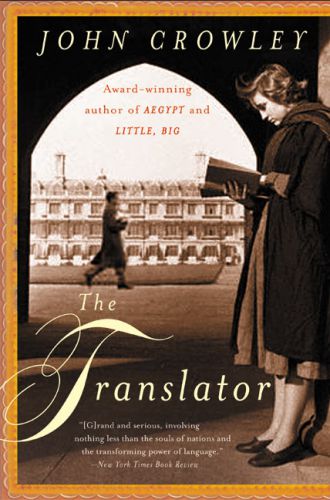
The Translator – by John Crowley

As you know, I love books about poets and the power of language. This book won me over on the second page with reference to Shelley’s famous ‘defence of poetry’: Poets are the unacknowledged legislators of the world. (“of the world!” the main character exclaims later.)

Set in the time of the Cuban missile crisis, poetry and politics are vying for power. Kit Malone attends college in the midwest with missile silos nearby and exiled Russian poet, Falin as her teacher. The novel follows the development of their relationship through Kit’s translations of his poetry and their growing love for each other.

The politics of the time is conveyed through the secrecy of the government – the mysterious Milton Bluhdorn asking questions about Falin’s whereabouts – the radical student groups that form and the tragic reality of Kit’s brother joining the armed forces. Falin tells Kit about his childhood in Russia as an orphan and when she lends him Through the Looking Glass, he seems to relate to Alice’s surreal journey from childhood and being in a world of opposites:

When I read I believed I discovered a flaw in it: would it not be impossible for Alice to pass through the mirror? She would I thought only kiss herself there: face to face, hand to hand, breast to breast. How to pass through? Then I saw, no, this is supreme genius of the book: that if Alice passes through her mirror, then Alice from the other side must also pass through; and while we read interesting adventures of Alice in her mirror, at the same time there is another story not told, the adventures of mirror-Alice here, where she does not belong, strange world where clocks run only one way and you cannont tell red kings from white.

These two ‘selves’ of Falin are evident too, when he discusses with Kit the impossiblity of translating a poem. He insists that translations of his poetry are no longer his and a new poem has been born that could never capture the nuances of the original language (in Russian, Freedom, volya rhymes with Fate, dolya) Therefore, when he asks Kit to translate his Russian poems into English, she soon realises that it’s not a way of preserving his poems but a way for her to create her own work and let go of what she sees as the dangers of writing.

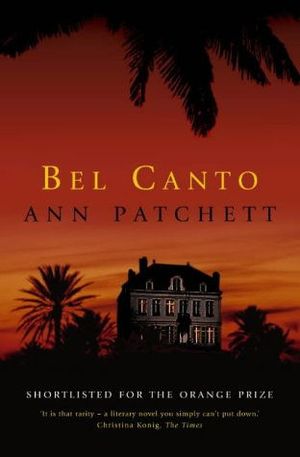
Bel Canto – by Ann Patchett

This is an impressive book. Somehow, Ann Patchett manages to create vivid characters with plausible relationships in the most limited of settings.

The novel begins dramatically with terrorists swarming an international gathering, looking for the president of the small Latin American country. But it turns out he stayed home from the party to watch his favourite soap opera and, with no plan B, the terrorists let all but one of the women leave and keep the rest of the group hostage while they figure out what to do. The exception is the famous opera singer Roxane Cox, who proves to be a valuable bargaining tool.

The operatic theme is clever, tying Roxane’s morning singing routine into the relationships that form within the captive group. Convincingly, we lose track of time after a while and the characters quickly lose any desire to escape, accepting the house they originally entered for a birthday party as their new home.

It would be tempting with such a confined setting (both time and space are restricted here) to go into long detailed descriptions of the characters’ lives, as a way to broaden the scope and escape the four walls. But this is never indulged and we begin to care about the characters knowing little about them other than their thoughts and feelings in the immediate situation. Patchett has an amazing skill in using perspective, whereby she effortlessly shifts from one character to another at times within the same paragraph, as if gliding freely among their thoughts.

As in opera so too does this novel end tragically. However, like the captors we have become so swept up in the new life they have created, the inevitable ending comes as quite a shock.

The other thing I particularly loved about this book was the importance of the polyglot, Gen. As this is an international gathering, he becomes invaluable translating firstly the demands of the terrorists, but increasingly as a tool for characters to confess their feelings for each other; declaring love from Russian into English and Japanese to Spanish. But he’s not always required and as Roxane knows, language is not the only way to express oneself.

Gilead – by Marilynne Robinson

The tone and voice of this book are particularly compelling. Written as an extended letter from a dying father to his son, the meditative style draws the reader in to glimpses of everyday family interactions and the deep and complicated history of the characters’ lives.

Reverend John Ames, narrating from his home in Gilead, links the generations of Ames men through descriptions of their shared vocation and differing understandings of theology. There are certain things he wants his son to know and remember, but also stories that evolve and ramble in a convincingly reminiscent way, all the while with a hint of mystery unfolding.

I loved the father and son relationships in this book and how complicated they became. John Ames Boughton (Jack) is the son of Ames’ best friend, but named as if his own son. His arrival back in town brings out a conflict in Ames, who feels responsible for yet greatly wary of the younger man. He’s clearly hiding something and Ames senses he should be warning his own family of him before he passes on.

The young child to whom the letter is addressed appears in snippets of daily childhood life, playing with his friend Tobias while his father speculates and longs to know about the man he will grow into.

Ideas of faith in this book run deep but somehow gently, as Ames grounds his thoughts in reality and ponders very human questions of life, death and love:

…nothing had prepared me to find myself thinking day and night about a complete stranger, a woman much too young, probably a married woman – that was the first time in my life I ever felt I could be snatched out of my character, my calling, my reputation, as if they could just fall away like a dry husk. I had never felt before that everything I thought I was amounted to the clothes on my back and the books on my shelves and the calendar I kept full of obligations waiting and obligations fulfilled. As I have said, it was a foretaste of death, at least of dying. And why should that seem strange? ‘Passion’ is the word we use, after all.

The Lizard Cage – by Karen Connelly

I found this to be an amazing read. I got to the end – crouched and anxious – and went straight back to read the beginning again.

Teza is a political prisoner in solitary confinement during Burma’s turmoil of the mid-1990s. He gleans scraps of information about the outside world wherever he can and remains dignified through Buddhist patience and by upholding the precepts. Before his imprisonment, Teza used anti-dictatorship songs to influence those around him; while in the cage he continues to inspire those who come near him with his forbearance.

Connelly’s vivid, lyrical writing is riveting. Having spent some time in Burma (Myanmar) she is able to give the real and gruesome details of the harrowing setting, but her language maintains beauty.

“Little Brother” the young boy Teza befriends serves as both a symbol of hope and a tragic illustration of the lowliness of prison-life and a people who have lost control.

This is an inspiring look into what it means to be free and how vital it is to make human connections. Teza’s ritual dissection of the cheroot cigars reinforces this again through the importance of words:

“After eating and meditating, the cheroot ceremony is the most important event in his life. It is a challenge to perform it well. To peel the filters apart slowly enough is an act of discipline.

The filters are made with rigid, dried straw. Holding the filters tight is a band of newspaper.

Words.”

He takes the scraps of writing and lines them up, creating a story for himself. It is a contraband pen that causes the most violent and distressing events for Teza and Little Brother, but before this, reading the pieces of newspaper, Teza realises

“As long as there is paper, people will write, secretly, in small rooms, in the hidden chambers of their minds, just as people whisper the words they’re forbidden to speak aloud. The generals can’t stop them. Ne Win himself can’t stop them. He never could. Words are like the ants. They work their way through the thickest walls, eating through bricks and feeding off the very silence intended to stifle them.”

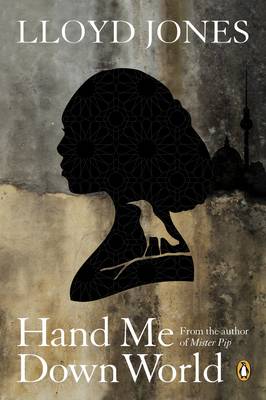
Hand Me Down World – Lloyd Jones

I have become emphatic about the power of story. Several books I’ve read and loved recently have captured my imagination around this idea: David Mitchell’s use of language and language barriers in The Thousand Autumns of Jacob de Zoet and Janet Frame’s insistence that it is words that create the physical world in Patrick Evans’ brilliant Gifted.

Hand Me Down World strengthened my conviction that stories are crucial to human existence. Similar to these other authors, Lloyd Jones is embodying a character that he has to get right. This is not historical fiction or the imagined story of well-known literary figures, but Jones has much to prove to that suspicious post-Mr Pip audience about his ability to be the voice of someone so far removed from his self.

And prove himself he does. Ines is not necessarily a loveable protagonist on a noble journey, and it could be argued that her methods are far from forgivable at times, but I sympathised with her motive and believed wholly in her naïve determination to see her son.

Her story is first told second-hand as the people she has encountered describe her in testimonials. The next part of the book is from Ines’ point of view as she looks back over what the others have said. She is frank about her own short-comings and the details others have skipped over, either through their own embarrassment or protection of her. It’s an interesting exercise for the reader and I found myself flicking back to previous accounts and thinking deeper about the idea of ‘truth’; how stories change when we say them aloud – how we choose, omit, brush over details that others may need to hear.

Language itself is also a theme and as borders are crossed, language shifts and each character’s ability to be understood is tested. Ines is criticised for her “hotel English” but in fact the use of dialogue is sparse and never more than is necessary.

This is very clever story-telling. Jones lets us piece things together and slips in huge events in non-assuming ways that meant I was always rereading and cross-referencing the tale. But I was also moved by the ending, which again sent me straight back to the beginning.

The joy of this kind of writing is exactly what must cause headaches for the author in the process: authentic voices that are believable enough that we question their integrity when they get things wrong, not the author’s ability to stay consistent. Characters who create worlds and new truths through the telling of stories.

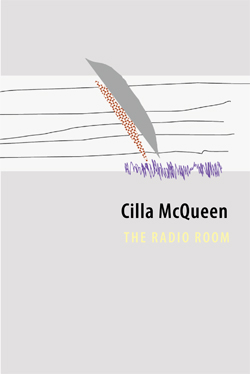
The Radio Room – Cilla McQueen

After hearing Cilla McQueen read ‘Ripples’ at The City Gallery recently, I have been engrossed in The Radio Room.

McQueen is a talented and intelligent poet whose work spans everything from the tiniest insect “At eye-level with the ground I see its round black nose, / soft pea-green skin and sparkling eyes.” to the nature of existence “…over time the mind / caught on a detail , thorn, spark, madeleine, opening/ a bubble/ torus/ wormhole;/ via chance harmonics,/ pools of connection, shocks and ripples,/ traversing dimensions.”

Her use of form is both meticulous and playful and there are several pantoums in this collection, highlighting this scope. My favourite is ‘Mining Lament’ where the repetition really does echo lamentations. The lines “Remains of the hill the painter saw” and the images of “rutted clay”; “stubborn relic” and repeated harsh verbs (“sluice”!) contrast so perfectly with the “rounded hill of golden ore” that, although the poem is ekphrasis of an 1870s Aubrey painting, it is so alive with destruction and resulting desolation.

McQueen proves she is a craftswoman and an artist in this collection. Her ability to move smoothly from one form to another without ever sounding forced or lost provides the reader with security and trust as we travel space and time – from the Fouveaux Strait to Ynys Elen. The many references to other artists and poets – Hone Tuwhare appears in moments of reflection and humour – confirm McQueen’s status as both brilliant and very human.

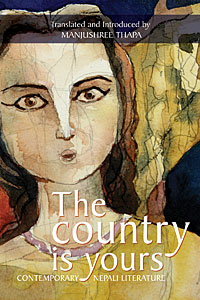
The Country is Yours – Contemporary Nepali Literature

While in Nepal recently I was keen to find some Nepali literature. The Country is Yours is a collection translated into English by Manjushree Thapa and featuring stories and poems written in the period leading up to and after the re-establishment of democracy in 1990. The feeling is of renewed self-expression and the works cover not only the sense of emerging political freedom but also “more personal visions of transcendence”.

Thapa says in her introduction “This collection should be taken by those unfamiliar with Nepali literature, as an introduction to contemporary voices,” but stresses that “this book does not offer an authoritative overview of the literature of this period. It is, instead, a personal collection of works that moved me and compelled me to translate them.”

The book is divided into sections to cover the four themes: ‘The Perplexity of Living’; ‘The Right to Desire’; ‘The Imminent Liberation’ and ‘Visions’.

Here’s a poem from the second section by Benju Sharma:

Come

Spring
come
in the lips of tender buds
Come red and fiery
sprouting passion
on cheeks ripened by
the scarlet of rhododendrons
Make me soar
on the wings of horses
that whinny and neigh far above
the purple jacaranda trees
Binding me in the clasp
of velvety tips of green grass
slash through all these bars
with your sword
and seat me in a honeycomb
overflowing with
the elixir of bees
Set me on a dinghy
adrift on swelling waves,
and cover me with
the embrace of the entire sky
Tie me with the mighty limbs of
boughs and branches
A few outcroppings
you might have to level
A few craters
you might have to fill
So come
gathering the force of a bulldozer
Come as ferocious Bhairava*

(*the fierce manifestation of Shiva associated with annihilation.)

These I have loved – Harvey McQueen

Harvey McQueen is a leading New Zealand poet, anthologist and educator who’s been publishing works since the 70s. When teaching poetry I still pull out the stacks of ‘Ten Modern New Zealand Poets’ and ‘A Cage of Words’, collections Harvey’s put together to help demystify NZ poetry for young people.

‘These I Have Loved’ is a new collection of Harvey’s 100 favourite New Zealand poems, divided into sections such as “Love the world”, “You know the place”, “When can their glory fade”. Harvey starts each section with a description of what the poems mean to him, with explanations ranging from personal acquaintance with the poets to the poems having ‘struck a chord’ with him at High School.

The lovely thing about this being a collection of personal favourites is that there’s no obligation to include certain works or a particular balance. The section “The peach tree at my door is broken” only includes poems by James K Baxter, who Harvey says “bestrides my poetry-life like a colossus.” and Allen Curnow also gets a lot of exposure. Harvey says of them both, “In their different ways they gave an explanation of the human capacity for evil and cruelty which seemed to cut across all our dreams.” Reflection on the classics is inevitable and necessary when covering the history of New Zealand poetry, but Harvey’s an avid reader and it’s pleasing to come across Amy Brown’s villanelle and Mark Pirie’s take on William Carlos Williams’ ‘This is just to say.’

This book is a wonderful culmination of a lifetime spent reading, writing and teaching poetry. Here’s a James K Baxter poem, one of my many favourites from Harvey’s collection:

Haere Ra

Farewell to Hiruharama –
The green hills and the river fog
Cradling the convent and the Maori houses –

The peach tree at my door is broken, sister,
It carried too much fruit,
It hangs now by a bent strip of bark –

But better that way than the grey moss
Cloaking the branch like an old man’s beard;
We are broken by the Love of Many

And then we are at peace
Like the fog, like the river, like the roofless house
That lets the sun stream in because it cannot help it.