Some semi-formed ideas on Karma and Physics

I don’t know much at all about quantum field theory, but there’s something in there about the interconnectedness of all particles, meaning we can’t do anything without inadvertently affecting something else. Or perhaps that’s chaos theory. My actions now cause a chain reaction of unexpected yet somehow predictable events. Newtonian physics suggests something similar. Is it even physics though to suggest that some things just can’t go unnoticed? I interact with enough people on any given day that even the faintest flicker of a smile could have repercussions in the days and homes and lives to come. Religion will tell us this is true too. Almost every religion promises future rewards for present moments of good. The Bible tells us to “love your enemies, do good to them, and lend to them without expecting to get anything back. Then your reward will be great,” as in every action has an equal and opposite reaction.

I haven’t yet taken on an entire set of religious beliefs but there are many aspects of different religions that appeal. The idea of karma, for example, is a liberating one. I have less need to seek revenge on wrong doers or to wish ill on those who harm others because the universe judges in the most righteous of ways. Less cosmically, we have justice: other humans deciding how other humans should be treated based on rules and actions. But beyond our control is karma: you just don’t get away with being an asshole. We can feel smug imagining its possibilities and believing that eventually everyone will get their comeuppance. This isn’t necessarily incompatible with what we know of the laws of physics and common sense either. Someone who beat you up at school possibly grew up only knowing violence as a way of solving problems. As they continued through life with this attitude they found they were isolating people, missing out on the jobs they wanted and ruining potentially loving relationships. They got their comeuppance. I like to think it works with particle theory too: We’re all connected to each other and the universe feels all our various shifts and shuffles, every movement and push whether destructive or constructive.

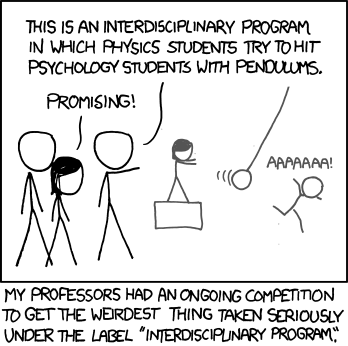
Newton’s third law is often demonstrated with a pendulum swing. The force put in to send it one way means it will swing back with equal magnitude in the opposite direction. This can be useful when thinking about emotions and why when you feel strongly about someone or something you often feel extremes of both love and hate. Emotionally, I have a wide arc to my swing. I can feel great joy and as a counter balance must also be prepared to feel great sorrow. I could never be someone who hangs steadily and calmly in the middle, keeping upright and never ticking too far in one direction for fear of the reactionary tock in the other. But this can be a great affliction at times and I have to make sure I feel everything on the way from one end of my arc to the other. Making sure I enjoy the ride between and feel every emotion that makes me human. But if some of these feeling are just the swing back from earlier feelings, how can I trust them? And am I even in control?

Tuesday Poem – From the kitchen

I watch great gulls,
beaks curved like peeling knives,
pull mussels off the rocks
and drop them from a hover above the road.

The meat inside must be worth the work,
scraps of lunch surely remain unguarded
at the Fisherman’s Table.

In the harbour a looming ferry
tilts yachts in its wake.
While a loamy garden’s succulents
grow tough.

Tuesday Poem

Tuesday Poem – Labour Weekend

You pack
a wheelie suitcase
with clothes you bought yourself
years ago.

You take a stack of magazines,
the fruits of a year’s hard work
proof
she should be proud.

Three bananas for the road,
your cell phone charger
‘The art of war.’

She will drive for hours
to pick you up
pleased
you’ll quietly screw up

the list of questions
fifteen years’ worth
that’s been burning a hole
right through.

© Saradha Koirala 2010

Tuesday Poem

Tuesday Poem – Beyond Silence

Yesterday one of my year nine classes had the task of writing a poem from a selection of words – much like magnetic fridge poetry! Here’s one I wrote while they were busy:

Beyond silence.
The Milky Way scatters its ashes
in the crumpled night.

Alive, he soars, twists, blown
on a shimmering southerly
towards hills, peaks
beyond silence.

Faded reflections ripple
on a diamante surface,
while the terracotta moon
drags behind.

Until dawn tears a scarlet mouth
in the soft grey mist.

Tuesday Poem

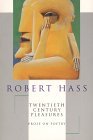
Twentieth-Century Pleasures – Robert Hass

Hass’ essays are amazing. He obviously loves what he’s talking about and often brings in life experience and family to illustrate his points.

In the essay ‘Images’ Hass looks at Haiku. Haiku seems to be the ultimate image-based poetry (even though form is also very important). The essay starts by looking at evidence of family activity: The towels drying on the fence, the note left by the daughter. These are images that are full of meaning to Hass as a parent but he says:

I had written about beach towels drying on a fence at the end of August in the early morning heat. I think it pleased me as much as anything I wrote last year, but I knew that it had seemed slight to everyone who had seen it. I had somehow not gotten it right.

Hass’ honesty in his own failing is endearing. He goes on to suggest that if he’d taken the image to Basho, he would have been accused of trying too hard to say unusual things.

This is something to keep in mind about images: is the image still interesting out of context? I feel that this image for Hass is loaded with family and holiday; an understanding that readers do not necessarily associate with towels drying on a fence.

But then it is these associations that give images more power. Hass talks about a Buson poem:

Apprentice’s holiday:
hops over kite string,
keeps going.

It is important to know that Apprentice’s holiday is associated with kite-flying and that it was a day people learning trades were given to go and visit family. Knowing this makes the action of hopping over the string and carrying on (presumably to visit family) so purposeful, and the way the string is tight suggests a whole image of the flying kite – even though we never see the kite. Similar associations can be made in Haiku as the seasons are often suggested by the colour of things: yellowing fields, blossom, snow and so forth.

‘One Body: Some Notes on Form’ again starts with a family memory. The essay is concerned with how form works with intention in poetry to create a sense or feeling. Hass writes “I am thinking of the form of a poem, the shape of its understanding. The presence of that shaping constitutes the presence of poetry.” He says it is not the tone, image or qualities of the content that create or shape the poem into existence, but form.

I found this essay so interesting and quite complicated. I’m not sure I totally understand form in this sense, as it is different to using rhythm or sound-making. I am, however, thinking quite consciously about form in terms of how a poem feels and looks on the page. If the poem is set in a wide landscape, I try to give the poem the space to fill this, often with longer lines and shorter stanzas.

Another thing I’m interested in is rhythm. In ‘Listening and Making’, Hass talks about the purpose of rhythm and how patterns can be made and broken according to content and theme. He writes that it is not the syllables or length of a line, but the amount of stresses that creates the rhythm. He looks at some cases where the pattern is created by stresses and pauses and then inverted at the end. For example, the metric pattern of Yeats’ lines

When you are OLD and GREY/ and FULL of SLEEP

And NODding by the FIRE,/ TAKE DOWN this BOOK

And SLOWly READ,/ and DREAM of the SOFT LOOK

Your EYES HAD ONCE,/ and of their SHAdows DEEP.

is

2/2

2/3

2/3

3/2

where the pattern is reversed in last line. Hass says “Life and death, odd and even are the terms of play.” I find this fascinating that the rhythm would be so connected with the themes of this poem. I wonder how consciously the poet creates and distorts these patterns or if it is something that just sounds right in the writing. It does seem that there should be a physical shift in the poem if the poem has shifted to a different place thematically. Often it is the change in rhythm that alerts the change in tone.

Line length is important when looking at rhythm, so that a line does not carry too many pauses, which could drag. In this sense, line breaks should occur where the stresses fit, and not necessarily where length, content or syllables are concerned.

Form and function appear crucial when looking at poetry this way. And why not? A poem should surely be created meaningfully with images, rhythm and form that suit the purpose and add up to its shaping and coming into being.


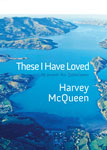
These I have loved – Harvey McQueen

Harvey McQueen is a leading New Zealand poet, anthologist and educator who’s been publishing works since the 70s. When teaching poetry I still pull out the stacks of ‘Ten Modern New Zealand Poets’ and ‘A Cage of Words’, collections Harvey’s put together to help demystify NZ poetry for young people.

‘These I Have Loved’ is a new collection of Harvey’s 100 favourite New Zealand poems, divided into sections such as “Love the world”, “You know the place”, “When can their glory fade”. Harvey starts each section with a description of what the poems mean to him, with explanations ranging from personal acquaintance with the poets to the poems having ‘struck a chord’ with him at High School.

The lovely thing about this being a collection of personal favourites is that there’s no obligation to include certain works or a particular balance. The section “The peach tree at my door is broken” only includes poems by James K Baxter, who Harvey says “bestrides my poetry-life like a colossus.” and Allen Curnow also gets a lot of exposure. Harvey says of them both, “In their different ways they gave an explanation of the human capacity for evil and cruelty which seemed to cut across all our dreams.” Reflection on the classics is inevitable and necessary when covering the history of New Zealand poetry, but Harvey’s an avid reader and it’s pleasing to come across Amy Brown’s villanelle and Mark Pirie’s take on William Carlos Williams’ ‘This is just to say.’

This book is a wonderful culmination of a lifetime spent reading, writing and teaching poetry. Here’s a James K Baxter poem, one of my many favourites from Harvey’s collection:

Haere Ra

Farewell to Hiruharama –
The green hills and the river fog
Cradling the convent and the Maori houses –

The peach tree at my door is broken, sister,
It carried too much fruit,
It hangs now by a bent strip of bark –

But better that way than the grey moss
Cloaking the branch like an old man’s beard;
We are broken by the Love of Many

And then we are at peace
Like the fog, like the river, like the roofless house
That lets the sun stream in because it cannot help it.

Tuesday Poem – A Greening


As if in time lapse
you shake your petals into being
quivering until the colour sets.

Indoors, daffodils wilt quickly
while out there everything –
the neighbour’s washing,
a lumbering bus
a sweating cyclist,
falling leaves
an escaping dog –
shhhhhhh
everything glistens.

© Saradha Koirala 2010

Tuesday Poem

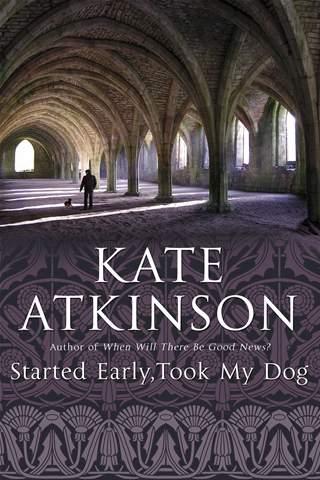
Started Early, Took my dog – Kate Atkinson

I’ve just finished reading this book – my first of the Jackson Brodie series – and I’m now determined to read everything Kate Atkinson has ever written.

This is a detective story but it’s incredibly clever in the way the fully-developed characters’ stories intertwine and their preoccupations clash and collide. Tracy, an ex-cop, sees a child being mistreated in the street and, bizarrely, offers to buy her on the spot. At the same time, private detective Jackson Brodie witnesses a brutish man kicking his dog and – on a similar whim to Tracy – snatches the whippet away and takes care of it.

The themes here are largely about responsibilities to protect. There are characters who can’t have children, characters who have lost children, missing children and misplaced children. Not to mention the dog. Each character has a different and convincing motive for their actions and when we look back into the past, we see the reasons behind each motion is deeply set in a disturbing incident from 1975.

This is not your ordinary detective novel. Kate Atkinson uses straight forward language flecked with perfect descriptions. When investigating adopted Hope McMaster’s past, for a long time Jackson finds nothing, her “past was all echoes and shadows, like looking into a box of fog.” And as different moments are seen from different points of view, the characters refer to what they experience in terms of what they know, often reflecting back on earlier descriptions.

Kate Atkinson deftly switches between character voices to give a well-rounded sense of scene and a clear picture of this particular part of society – crooked cops, prostitutes, aging television stars – all of whom play a crucial role in the outcome.